Introduction to Choosing Slot Machines
Once a specific casino has been determined to currently be the best of any available, choosing slot machines becomes the next step towards making a profit at slots.
Remember, statistics supplied to state gaming commissions show that the odds of winning are, on average, somewhere around 90%. By assessing all available casinos, then selecting the best possible, you’ve already improved your odds of winning – perhaps by several percentage points.
Whatever your gambling goals are, we’ll talk about those in the next step Identifying Gambling Goals. For now, we need to consider choosing slot machines that will most likely improve our overall odds even more.
However, because slot machines operate on RNGs, no amount of luck or perceived hot or cold streaks will impact the outcome of each spin. Each time a player hits a button to spin the reels or pulls the arm of a machine, the result is a unique event. With that in mind, it’s no surprises that at times, choosing a slot game can be an overwhelming experience. To make the process easier, in this article, some facts which can help in making the decision will be provided. As for bonus events, nearly all modern slot machines have events in which regular play stops, and with no further wagers, you get a spin of a bonus wheel, a pick’em event, free spins or some other extra. Bonus event payoffs have to be included in the calculation of the game’s overall return.
So, we’ve walked into our best casino to choose slot machines with the highest odds of winning we can find. How do we select a good slot machine? Most people don’t – they dive right in without much of a plan. Well, we have a plan.
Keep Reading … or Listen Instead!
Subscribe to the Professor Slots podcast at Apple Podcasts | Google Podcasts | iHeart Radio | Spotify | Stitcher | Pandora | Tune-In | SoundCloud | RadioPublic | Android | RSS and wherever else you find podcasts!
Why? Because everybody says it’s all about luck. If you pick wrong, “Well,” they say, “better luck next time.” Remember, casino employees are trained to say things like that. If you’d won a jackpot instead, you can believe they would have said, “You’re lucky! I’ll see you later when you win another jackpot!”
Slot attendants have a job to do, and it most certainly isn’t to get you to leave when you should. And, it’s difficult to not to influenced by such comments. But, try not to be.
In the following sections, I’ll briefly explain the following aspects of choosing slot machines:
- How odds are set within a slot machine
- Choosing denomination and maximum credits based on bankroll
- Basics of reading a slot machine’s paytable
- A simple way to use paytables to pick the best machines, and avoid the worst
Two Separate Odds of Winning
The odds of winning for a slot machine is a limited number of settings from the manufacturer. Besides understanding limited settings are available, it may help to understand that slot machines have two odds of winning to determine:
- If a player will or will not win anything
- How much that win will be, i.e., the jackpot amount
Why is understanding these two types of odds significant when choosing slot machines? Because winning slot machines come in all jackpot sizes. You’re still winning if you’re getting enough small jackpots that your bankroll isn’t shrinking. Even if it is slowly depleting, the bankroll can last quite a bit longer, so that’s also a winning slot machine.
Winning many jackpots this way is bankroll cycling. It may not seem very satisfactory, but whether it does or not depends entirely on what your gambling goals are. One type of gambling goal, earning maximum complimentary gifts, is most often achieved via bankroll cycling.
Another point about setting slot machine odds is, how often they change? Of course, it depends on the age of the casino, as discussed in the previous step Assessing Casinos for Success, or if it’s been renovated lately.
In my experience, older-style casinos change their slot machine odds every 7-10 days. Newer-style casinos can change their slot machine odds whenever the machine has been idle for 15 minutes or more, without a players club card inserted or the machine temporarily locked by a slot attendant.
Matching Bankrolls to Denomination/Credits
Only you can decide how much bankroll you want to risk gambling. I highly recommend bringing only as much money you can safely afford to lose comfortably.
Bankrolls quite literally determine which slot machines you can play. But, there’s more to it than understanding a $100 bankroll lets you play a 1-credit, $100-denomination exactly once, with very, very little chance of winning.
Whatever bankroll you have limits which slot machines can be played and how much it can be played. Slot machines have denominations ($0.01, $0.25, $1, $5, $10, etc.) and the maximum credits that can be placed in a single bet.
Slot machines typically must run for a while before wins become more likely. Yes, wins can occur at the first press of a button. They can also happen within the first few bets, where casinos offer a taste. But, usually, they need to run for a while.
About 100-120 bets is the right amount to be prepared to play to determine if you’re sitting at a winning (or breakeven) slot machine. Yes, be careful initially, perhaps making as few as 20 bets, to determine if it happens to be a “bad” machine. Trust your instincts!
If it is a poorly performing machine, a “tight” slot machine, it won’t pay out anything at all. Quick decisions are necessary here, so limited betting gives a clue to its performance, yet still leaves enough to gamble with on another machine if it isn’t – assuming you stop playing it as soon as you notice it’s not performing well enough.
So, again, you determine how much bankroll you can afford to spend. Now, take that number and divide it by 120 bets. If your bankroll is $60, then that’s 50 cents per bet. In such a way, the right choice is a 2-credit, quarter-denomination slot machine. Or, a 50-credit, penny-denomination slot machine.
Always remember to play maximum credits for the highest odds of winning. Meaning, your casino may not have a 2-maximum-credit quarter or 50-maximum-credit penny machines. But, perhaps they have a 1-maximum-credit quarter or less-than-50-maximum-credits penny machines. Such slot machines would provide more than 120 bets of play, which is going in the right direction!
Reading a Slot Machine’s Paytable
When choosing a slot machine to play, a crucial aspect of winning is to review its paytable before playing. Frankly, the casino industry gains an advantage over players that don’t read slot machine paytables.
Located somewhere on a slot machine is one or more tables showing the number of credits won if specific combinations of reel symbols appear in the pay line after the player makes a bet. Below is a relatively generic example of a paytable.
The figure shows reel combinations along with their jackpot depending on the number of credits bet. Paytables don’t typically explain how much credits
Not every reel combination and its associated jackpot are usually shown in a paytable. Other reel combinations not shown in the top rows are also presented in the paytable area. Slot machines with WILD symbols can represent it with a myriad of other possible reel symbols.
A final element of paytable example provided is specific information on winning reel combinations, which can include an indication of how the slot machine operates during play. The bottom row of symbol explains that that slot machine has reel symbols which will move after the reels stop momentarily.
Such additional features may not activate until the maximum credits are bet. It can sometimes be difficult, or impossible, to determine this. Most slot machines with bonus rounds will provide at least some information about it within its paytable.
Developing a habit of reviewing and studying a slot machine’s paytable can help improve your ability to judge the financial risks involved with playing that slot machine.
How to Avoid the Worst Slot Machines
The best way to improve the odds of winning via slot machine gambling is to stop making “sucker bets”. In less colorful language, avoid playing slot machines with terrible odds of winning.
First and foremost, understand when choosing slot machines that there are indeed terrible slot machines at a casino. By merely avoiding them whenever possible, on average, your long-term gambling return will improve. Each time we raise our odds like this, we’re pushing closer to achieving our gambling goals. So, let’s make sure we do that, shall we?
Calculate this “Goodness Ratio” as follows:
- When choosing slot machines, as discussed above, find the paytable with the denomination and maximum credits that best matches your available bankroll.
- Take a close look at the paytable. What is the maximum possible jackpot when maximum credits are bet?
- If the top jackpot is displayed in currency, divide it by both the denomination of the machine and the maximum credits
- If the top jackpot is displayed in credits, divide it by only the maximum credits
This “Goodness Ratio” tells us how worthwhile a specific slot machine is to play relative to others. By using this approach, any slot machine can be compared to any other slot machine.
Example: In the paytable above, the maximum jackpot is 2,400 credits with three maximum credits. Therefore, its Goodness Ratio is 2,400 / 3 = 800.
Repeat this calculation for slot machines of interest. While this Goodness Ratio will be similar for many slot machines, it can be startling to find “sucker bet” slot machines that might not otherwise be avoided.
Summary for Choosing Slot Machines
After a casino has been chosen, it’s time to select candidate slot machines most likely to result in a relatively high-value win. The size of your available bankroll, whatever it is, is an essential factor in this selection process. The bankroll size needs to be matched to the slot machine’s denomination and the number of maximum credits.
Here, we’ve also discussed how slot machines calculated odds twice: once to determine if you’ve won, and again to determine how much you’ve won. Another critical aspect discussed to improve a player’s performance was the basics of reading a slot machine’s paytable.
Finally, we talked about the “goodness” ratio to help select candidate slot machines and, perhaps critically important when improving our odds of winning, knowing precisely which slot machines must be avoided.
Next Steps
The next step on your journey to improving slots performance is Identifying Gambling Goals. Enjoy!
How To Pick Slot Machines
My research indicates I’m the first to share this information and offer personal coaching for slots enthusiasts.
I sincerely hope you find it both enjoyable and useful. For questions, call my voicemail hotline at 702-90-SLOTS, email me at Jon Friedl, or reach out to me through social media:
Further, I suggest that you sign up for my Free Report on the Best 7 Online Resources for Gamblers. Not only will you immediately receive a great list of online resources, but also other tips, tricks, and slots-related articles as I post them.
For the foreseeable future, this email subscription is my only request of you:
Finally, to provide further assistance if needed, I’m offering inexpensive, 50-minute-long, one-to-one Personal Coaching Sessions with me, your fellow slots enthusiast and friendly slot machine expert. Let’s talk! With only a dozen openings available most weeks, this is a strictly limited opportunity!
Have fun, be safe, and make good choices!
By Jon H. Friedl, Jr. Ph.D., President
Jon Friedl LLC
Slots are the easiest games in the casino to play -- spin the reels and take your chances. Players have no control over what combinations will show up or when a jackpot will hit. There is no way to tell when a machine will be hot or cold. Still, there are some pitfalls. It's important to read the glass and learn what type of machine it is. The three major types of reel-spinning slots are the multiplier, the buy-a-pay, and the progressive.
The multiplier. On a multiplier, payoffs are proportionate for each coin played--except, usually, for the top jackpot. If the machine accepts up to three coins at a time, and if you play one coin, three bars pay back ten. Three bars will pay back 20 for two coins and 30 for three coins. However, three sevens might pay 500 for one coin and 1,000 for two, but jump to 10,000 when all three coins are played. Read the glass to find out if that's the case before playing less than the maximum coins on this type of machine.
Advertisement
The buy-a-pay. Never play less than the maximum on a buy-a-pay, on which each coin 'buys' a set of symbols or a payout line. The first coin in might allow the player to win only on cherry combination, while the second coin activates the bar payouts, and the third coin activates the sevens. Woe is the player who hits three jackpot symbols on a buy-a-pay with only one coin played--the player gets nothing back. A variation is the machine with multiple payout lines, each activated by a separate coin. All symbols are active with each coin, but if a winning combination lines up on the third-coin payout line with only one or two coins played, the payoff is zero.
The progressive. You also have no reason to play less than maximum coins on a progressive machine. A player who eventually lines up the jackpot symbols gets a percentage of each coin played. The first progressive machines were self-contained--the jackpot was determined by how much that particular machine had been played since the last big hit. Today most progressives are linked electronically to other machines, with all coins played in the linked machines adding to a common jackpot.
These jackpots can be enormous -- the record is $39,710,826.26, a $1 progressive at a Las Vegas casino. The tradeoff is that frequency and size of other payouts are usually smaller. And you can't win the big jackpot without playing maximum coins.
If you must play fewer than maximum coins, look for a multiplier in which the final-coin jump in the top jackpot is fairly small. Better yet, choose a machine that allows you to stay within your budget while playing maximum coins. If your budget won't allow you to play maximum coins on a $1 machine, move to a quarter machine. If you're not comfortable playing three quarters at a time, move to a two-quarter machine. If you can't play two quarters at a time, play a nickel machine.
How To Choose Good Slot Machines
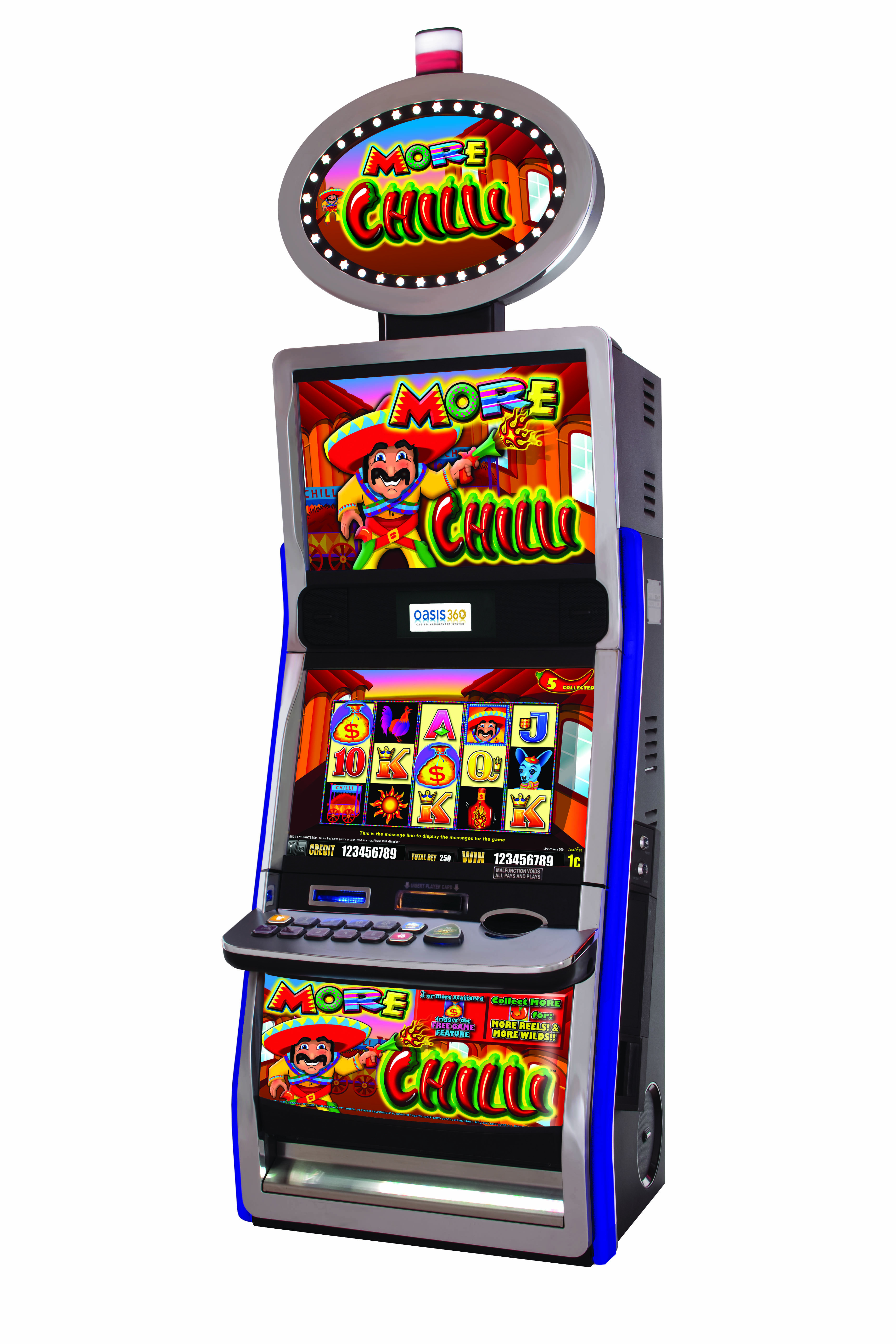
With so many paylines and the possibility of betting multiple coins per line, video slots are different. Some penny slots with 20 paylines take up to 25 coins per line. That's a $5 maximum bet -- a pretty penny indeed! Most players bet less than the max on video slots but are sure to cover all the paylines, even if betting only one coin per line. You want to be sure to be eligible for the bonus rounds that give video slots most of their fun. Some progressive jackpots require max coins bets, and some don't. If a max-coins bet is required to be eligible for the jackpot and you're not prepared to roll that high, find a different machine.
Money Management
How To Choose Winning Slot Machines
Managing your money wisely is the most important part of playing any casino game, and also the most difficult part of playing the slots. Even on quarter machines, the amount of money involved runs up quickly. A dedicated slot player on a machine that plays off credits can easily get in 600 pulls an hour. At two quarters at a time, that means wagering $300 per hour -- the same amount a $5 blackjack player risks at an average table speed of 60 hands per hour.
Most of that money is recycled from smaller payouts--at a casino returning 93 percent on quarter slots, the expected average loss for $300 in play is $21. Still, you will come out ahead more often if you pocket some of those smaller payouts and don't continually put everything you get back into the machine.
One method for managing money is to divide your slot bankroll for the day into smaller-session bankrolls. If, for example, you've taken $100 on a two-and-a-half-hour riverboat cruise, allot $20 for each half-hour. Select a quarter machine -- dollar machines could devastate a $100 bankroll in minutes -- and play the $20 through once. If you've received more than $20 in payouts, pocket the excess and play with the original $20. At the end of one half-hour, pocket whatever is left and start a new session with the next $20.
If at any point the original $20 for that session is depleted, that session is over. Finish that half-hour with a walk, or a snack, or a drink until it is time for a new session. Do not dip back into money you've already pocketed.
That may seem rigid, but players who do not use a money management technique all too frequently keep pumping money into the machine until they've lost their entire bankroll. The percentages guarantee that the casino will be the winner in the long run, but lock up a portion of the money as you go along, and you'll walk out of the casino with cash on hand more frequently.
That is changing in new server-based slots that have started to appear in casinos. Operators will be able to change payback percentages at the click of a mouse, but they still must have regulatory approval to do so.
There is a lot more to slot machines than meets the eye. But if you learn the ins and outs of playing them, you can use some strategies that just might help you hit the jackpot.
©Publications International, Ltd.